Erasmus Mundus 2026: How to Write a Winning Application
If you want to study in Europe, travel across multiple countries, and get your entire degree paid for by the European Union, the Erasmus Mundus Joint Masters (EMJM) scholarship is the ultimate dream.
With a fully funded scholarship covering 100% of your tuition fees, travel costs, visa expenses, and providing a massive €1,400 per month stipend (totaling up to €33,600 over two years), it is easy to see why this is one of the most competitive scholarship programs in the world.
Because competition is fierce, a basic application will not cut it. You need a strategic roadmap. Admissions committees do not just select the smartest students; they select the best-fit candidates who understand the unique multi-university “mobility” model of Erasmus.
Here is the exact step-by-step blueprint to writing a winning Erasmus Mundus application for the 2026 intake.
What Do Erasmus Mundus Selection Committees Actually Look For?
Under the Erasmus Mundus scheme, your program is not run by just one university. Instead, it is managed by a consortium of at least three European universities. You will study in at least two different countries during your degree.
Because of this unique structure, selection committees look for three main qualities:
- Academic Fit: How well does your undergraduate background align with the specialized, interdisciplinary curriculum of the master’s program?
- Intercultural Adaptability: Can you thrive in multiple European countries, adapt to different academic systems, and collaborate in international classrooms?
- Global Impact: How will you use the knowledge gained from this program to solve global challenges or strengthen relationships between Europe and your home country?
Step 1: Select Your Programs Strategically (The 3-Program Limit Rule)
You can apply to a maximum of three different Erasmus Mundus programs in a single application cycle. If you apply to four, all of your applications will be automatically disqualified.
Do not waste your three slots. Select programs where your undergraduate coursework directly aligns with the master’s modules.
- Tip: Review the “Mobility Track” of each program in the official catalogue. If a program requires you to spend Semester 1 in France, Semester 2 in Spain, and Semester 3 in Italy, highlight your interest in these specific partner universities in your application.
Step 2: Craft a High-Impact Statement of Purpose (SOP)
The Statement of Purpose (SOP) or Motivation Letter is the single most important document in your application package. It can easily beat a higher GPA if it tells a compelling, coherent story.
For Erasmus Mundus, your SOP must follow a structured, academic narrative:
The Winning 5-Paragraph SOP Structure:
- Paragraph 1: The Hook & Specific Alignment: State clearly why you are applying to this specific program. Mention the program by its official acronym (e.g., “MEME” or “Bioceb”) and explain how your academic passions align with it.
- Paragraph 2: Your Academic Foundation: Highlight your undergraduate degree, key courses, thesis topic, and any research projects. Focus on achievements that prove you can handle the rigorous European academic standard.
- Paragraph 3: Relevant Practical Experience: Showcase internships, work experience, volunteer work, or extracurricular projects that demonstrate your leadership, problem-solving skills, and resilience.
- Paragraph 4: Why This Consortium & Mobility Track? Explain why you want to study at these specific European universities. Mention a course module or a professor’s research at Partner University A (e.g., University of Bordeaux) and Partner University B (e.g., Södertörn University) to prove you did your research.
- Paragraph 5: Future Goals & European Connection: Outline your long-term career plan. How does this master’s degree prepare you for it? Conclude by linking your goals to global priorities (such as the UN Sustainable Development Goals or the European Green Deal) to demonstrate your vision.
Step 3: Format a Flawless Europass Academic CV
European universities prefer structured, clean, and highly professional CVs. For Erasmus Mundus, you must use the official Europass CV format.
Keep your CV to a maximum of two pages and organize it as follows:
- Education: List your degrees, institutions, graduation dates, and GPA/grades.
- Research & Publications: If you have published papers or written an undergraduate thesis, place this section high up. Academic research is highly prized by European selection committees.
- Work/Internship Experience: Highlight roles where you had technical or analytical responsibilities.
- Academic Projects & Key Skills: List specific tools, laboratory techniques, programming languages, or analytical software relevant to the program.
- Awards & Scholarships: Include any academic distinctions, Dean’s list placements, or competition wins.
Step 4: Secure Strong, Specific Reference Letters (LORs)
Most programs require two academic reference letters from professors who have taught or supervised you.
A winning letter of recommendation must be highly specific. A generic letter saying “This student was in my class and got an A” will not help you.
What Your Recommenders Must Include:
- Context of Relationship: How long they have known you and in what capacity (e.g., thesis supervisor, course instructor).
- Specific Examples: Mentioning a specific project you designed, a paper you wrote, or a presentation you delivered.
- Soft Skills: Discussing your intellectual curiosity, teamwork, adaptability, and emotional maturity.
- Stamps & Letterheads: The letters must be written on official university letterhead, signed, stamped, and contain the referee’s official university email address.
Step 5: Master the Language Requirements (The MOI Alternative)
While most Erasmus Mundus programs require proof of English proficiency, many accept a Medium of Instruction (MOI) Certificate if your undergraduate degree was conducted entirely in English.
If your program allows this waiver, you can save over $250 by requesting a formal letter from your undergraduate university registrar certifying that English was the sole medium of instruction and evaluation.
- Note: Some highly competitive engineering or medical programs still mandate IELTS or TOEFL. Check individual program pages early so you have time to sit for the exam if required.
Match Your Profile and Build Your Documents on Abroaducate
Navigating the Erasmus Mundus catalogue, finding programs that match your exact undergraduate background, and drafting winning SOPs takes hundreds of hours.
We built Abroaducate to simplify your entire study abroad journey:
- Program Finder: Search over 2,500+ premium English-taught European programs and filter by tuition-free or fully funded options instantly.
- AI Application Copilot: Access our suite of specialized AI tools to write a high-impact Statement of Purpose, structure a perfect Academic CV following Europass standards, and generate tailored Cover Letters that impress European admissions committees.
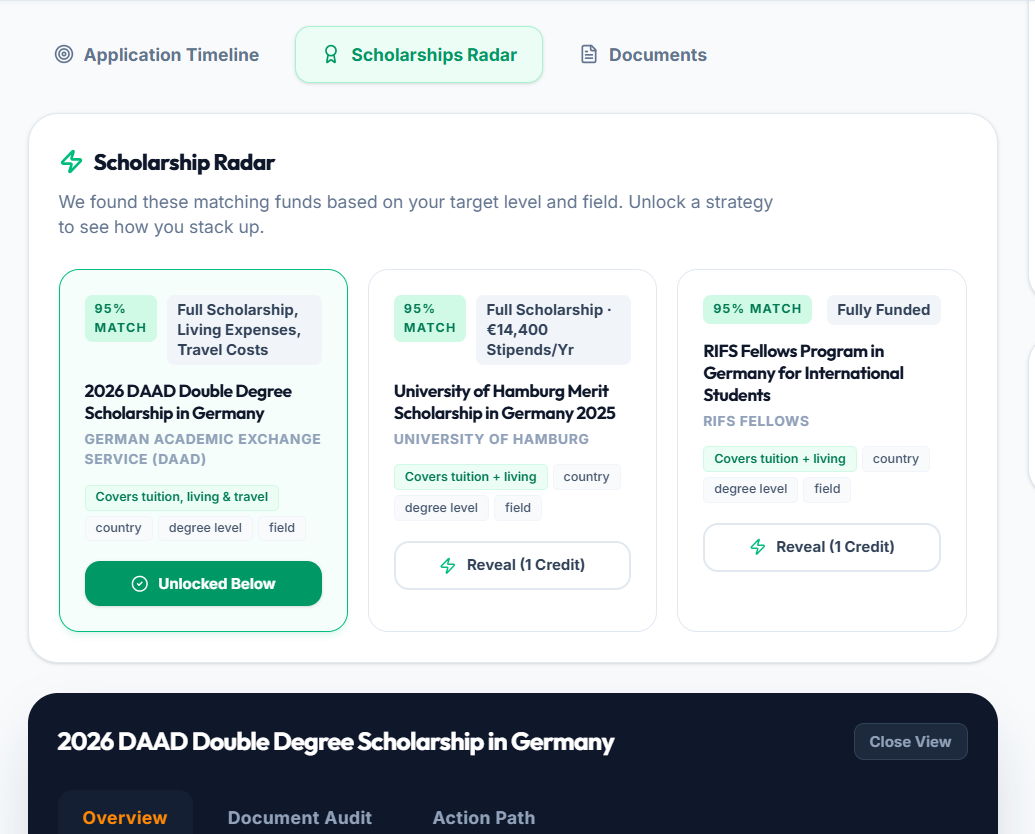
- Scholarship Radar: Stay updated on Erasmus Mundus deadlines and application opening windows so you never miss an opportunity.
FAQ Section
Can I apply for Erasmus Mundus if I am in my final year of university?
Yes! You can apply if you are currently in the final year of your Bachelor’s degree. You will need to submit an official enrollment certificate and a partial transcript. If selected, your admission will be conditional upon submitting your final degree certificate and transcript before the master’s program begins.
Can I apply if I already hold a Master’s degree?
Yes. There is no restriction against applying if you already have a Master’s degree. However, in your SOP, you must clearly explain why you need this specific Erasmus Mundus Master’s program and how it differs from or builds upon your previous studies.
Is there an age limit to apply for Erasmus Mundus scholarships?
No, there is no age limit. Whether you graduated yesterday or ten years ago, as long as you meet the academic requirements and have a strong motivation to study, you are eligible to apply.
Ready to Start Your European Journey?
Winning an Erasmus Mundus scholarship is a life-changing opportunity. By selecting the right programs, structuring a premium, academic Statement of Purpose, formatting a clean Europass CV, and utilizing Abroaducate’s AI Copilot suite, you can submit an application that stands out to any selection committee in Europe.